
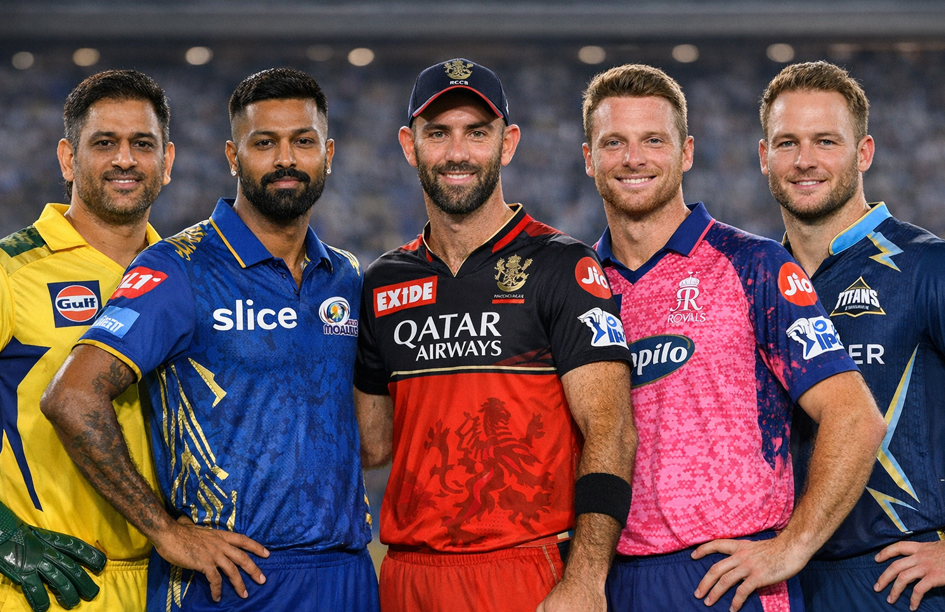
Top 5 finishers in T20 cricket right now are not just winning matches, they are actively reshaping betting markets in the final overs of games in 2026. From MS Dhoni to Hardik Pandya, these players have consistently turned impossible situations into victories, often within a span of 12 to 18 balls.
What stands out is not just their ability to hit boundaries, but how late they leave the game before striking. That delay creates massive volatility in live odds, and by the time the shift becomes obvious, the market is already behind.
In the current IPL 2026 phase, this pattern has become even clearer, with finishers directly influencing live odds in the final overs of matches happening right now.
Reading time: 4 minutes
MS Dhoni Still Controls the Final Overs Like No One Else
Now representing Chennai Super Kings, Dhoni remains the reference point for finishing under pressure. In recent IPL phases, he has operated at a strike rate above 180 in overs 16 to 20, despite limited balls faced.
His method is unchanged. He absorbs pressure, tracks bowlers, and waits for one over to break the game. Cricket teams often think they are ahead when required rates cross 12, but Dhoni’s pattern shows the game is still alive if he is there. Odds hold steady until they suddenly collapse in a single over. By the time he makes his move, the result is already shifting.
Hardik Pandya Has Become the Most Reliable Active Finisher
Leading Mumbai Indians, Hardik has evolved into a complete finisher. Since 2022, he has averaged above 30 in T20 internationals with a strike rate over 140 in pressure phases.
What separates him is timing. He accelerates earlier, often between overs 14 and 18, which reduces the need for last over risk. This shifts cricket betting sites sooner, but not fast enough when he targets weaker bowlers. This has been visible across recent IPL matches where momentum shifts have started as early as the 15th over. The move comes early, but the market still reacts late.
Glenn Maxwell Creates Chaos That Markets Cannot Price Correctly
Playing for Royal Challengers Bengaluru, Maxwell remains one of the most volatile finishers in cricket. His T20 strike rate above 150 reflects his ability to flip games instantly. His unbeaten 201 in the 2023 World Cup showed he can also control a chase before exploding late.
He does not build linearly. One quiet phase can be followed by a 20 plus over, triggering massive odds swings. When the game looks stable, he is usually closest to breaking it.
Jos Buttler Builds Then Finishes With Precision Timing
A key player for Rajasthan Royals, Buttler combines control with late acceleration. His T20 strike rate sits around 145, but that number rises sharply once he settles past 30 balls.
He builds first, then finishes. That pattern creates a false sense of control for the opposition. Markets often price the chase based on current rate, not upcoming acceleration. The game looks balanced until it suddenly is not.
David Miller Remains the Most Underrated Match Closer
Representing Gujarat Titans, Miller continues to deliver with a T20 strike rate above 140 and an average above 35 in recent years. He does not rely on power alone. He minimizes dot balls and targets gaps, which keeps the equation under control without dramatic swings.
That subtle control delays market reaction, creating value for those tracking the chase properly. The control is quiet, but the outcome is already decided.
The Numbers Behind Elite Finishing and Why Markets Still Miss It
Across T20 cricket, teams now score at over 10 runs per over in the final five overs on average, compared to around 7 to 8 in the middle phase. This sharp increase highlights how games are being decided almost entirely at the death.
The cricket player impact is even clearer. Finishers like Dhoni and Maxwell can reach strike rates between 150 and 200 in short bursts during the death overs, which means a required rate of 12 is no longer a barrier but a baseline.
In multiple recent cricket matches, live odds have shifted from around 2.20 to 1.60 within a single over when these finishers take control, highlighting how quickly the market is forced to react. The betting implication is critical. Markets still react heavily to required run rate without fully pricing in who is batting and their historical scoring patterns.
What looks like pressure is often opportunity.
Final Take
This started as a simple ranking of elite names, but it quickly revealed something deeper. These five are not just finishing games, they are redefining how matches are closed in modern cricket.
The final overs have shifted from pressure management to precise execution, where calculated hitting and timing outweigh survival. And by the time that shift becomes visible on the field, the reality is already clear. The result has tilted, and once again, the market is left reacting instead of anticipating.
Cricket betting can become far less predictable when external factors begin to interfere with normal match flow. Sudden interruptions, changing conditions, or unexpected delays can quickly distort momentum and make typical form-based analysis less reliable. It is important to remain disciplined in these situations, avoid reacting emotionally to sudden shifts, and only engage when the conditions are stable enough to assess properly. Always set clear limits and treat betting as controlled entertainment rather than a necessity.
Disclaimer
This content reflects current observations from cricket matches and how evolving conditions can influence betting markets. It is designed to offer context and understanding of market behaviour rather than direct betting instruction. Outcomes in cricket can change rapidly, and no strategy guarantees success. Always make independent decisions, manage risk carefully, and ensure you fully understand the uncertainty involved before placing any bets.

Wendy Prinsloo
Wendy is an iGaming journalist and sports betting writer who covers cricket news, betting platforms, odds, and online casinos.
She writes about the latest developments in the cricket industry and helps readers stay updated while understanding how betting works.


