
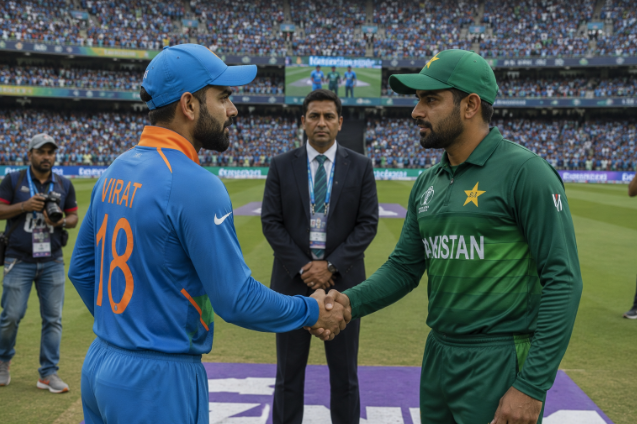
One of the first statistics many cricket bettors look at is the head-to-head record.
Team A has beaten Team B in seven of the last ten meetings. Team B has won only twice at a particular venue. One side appears to have a clear historical advantage.
At first glance, the numbers look useful.
The problem is that cricket changes far more quickly than most head-to-head records can keep up with.
Players retire, formats evolve, conditions change and squads are rebuilt. Yet historical matchup statistics continue to influence betting discussions across every major tournament.
Understanding when head-to-head data matters and when it becomes misleading can help bettors avoid one of the most common analytical mistakes in cricket.
Reading time: 3 minutes
Why Head-to-Head Records Look So Convincing
Humans naturally look for patterns.
If one team repeatedly beats another, it feels logical to assume the trend will continue.
Broadcasters mention it. Preview articles highlight it. Social media often amplifies it.
The result is a statistic that feels important before anyone has even considered the current teams, conditions or venue.
That creates a problem because historical dominance does not always translate into future success.
The Players Often Change Faster Than The Record
A head-to-head record covering five years may include players who are no longer part of either team.
In franchise cricket, squads can change dramatically between seasons. International teams also evolve constantly through injuries, retirements and selection changes.
A matchup record built around players who are no longer involved may have very little predictive value.
Before relying on any historical trend, bettors should consider how many of the players responsible for that trend are actually taking part in the upcoming match.
Conditions Usually Matter More
A team that struggled repeatedly on spin-friendly pitches may perform very differently on a flat batting surface.
Likewise, a side that historically found conditions difficult in one country may become much more competitive elsewhere.
Venue characteristics often provide more useful information than broad head-to-head numbers.
This is particularly true in T20 cricket, where conditions can influence scoring rates dramatically.
Small Sample Sizes Create Big Problems
Many head-to-head records are based on surprisingly few matches.
Five games may sound significant, but cricket contains enough randomness that short-term results can easily exaggerate differences between teams.
A couple of close finishes, weather interruptions or outstanding individual performances can shape a record that appears far more meaningful than it really is.
Looking beyond the headline number is essential.
When Head-to-Head Data Actually Helps
This does not mean matchup history should be ignored completely.
It becomes more valuable when:
- The teams have remained relatively stable.
- The matches occurred recently.
- The venue conditions are similar.
- Specific player matchups are involved.
- The sample size is large enough to identify meaningful trends.
In those situations, historical data can provide useful context.
The key is treating it as one piece of information rather than the entire analysis.
Player Matchups Are Often More Useful
Instead of focusing on team-versus-team records, experienced analysts frequently examine individual matchups.
How does a batter perform against high-quality left-arm pace?
Has a particular spinner consistently troubled a certain player?
These smaller matchup details often provide more relevant insight than broad team records stretching back several years.
Modern analytics increasingly focuses on these interactions because they reflect current personnel rather than historical squads.
What Smart Bettors Look At First
Before checking head-to-head records, many experienced bettors focus on:
- Current form.
- Venue conditions.
- Team news.
- Weather forecasts.
- Pitch reports.
- Recent player performance.
- Tactical matchups.
Only after considering those factors do they return to historical records for additional context.
That approach reduces the risk of allowing old data to dominate current analysis.
The Bottom Line
Head-to-head records are useful servants but poor masters.
They can provide context, identify patterns and help frame a matchup.
However, they rarely tell the full story on their own.
The most successful cricket betting analysis combines historical data with current information rather than relying on one at the expense of the other.
In many cases, the next match will be decided by today’s players and today’s conditions rather than results recorded several seasons ago.
Quick Head-to-Head Checklist
| Question | Why It Matters |
| How recent are the matches? | Older results may have limited relevance |
| Are the squads similar? | Personnel changes reduce predictive value |
| Were conditions comparable? | Different venues produce different outcomes |
| How large is the sample? | Small samples can be misleading |
| Do player matchups support the trend? | Often more useful than team records |
Related coverage:
Cricket betting strategy guides
This article provides information and analysis, not betting advice. All betting carries risk, and losses are more likely than guaranteed returns. Please make independent decisions and bet responsibly.

Pradeep Singh
Pradeep Singh is a cricket betting expert with 17+ years of experience. His work is in The Times of India, Hindustan Dainik, and Dainik Bhaskar, covering cricket betting and gambling news.
At cricket-betting.net, he is our in-house expert, writing betting guides, match analysis, and news about cricket betting markets.


