
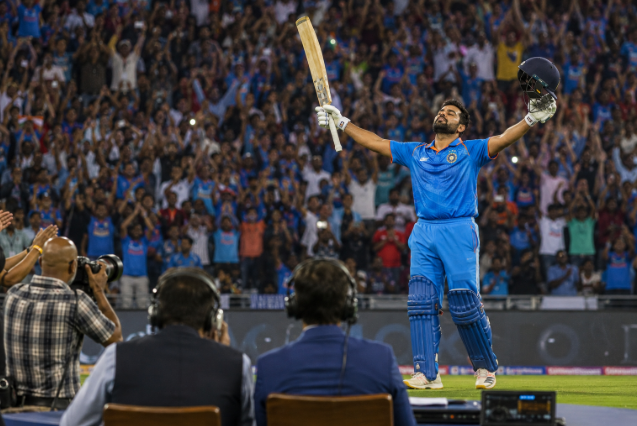
A batter scores a century.
A bowler takes five wickets.
A team wins by 100 runs.
Within minutes, social media is full of praise, television coverage focuses on the performance and betting discussions begin to change.
This reaction is completely natural.
It is also one of the biggest reasons bettors make poor decisions.
The tendency to place too much importance on recent events is known as recency bias, and it affects cricket betting markets more than almost any other psychological factor.
Understanding how it works can help bettors avoid chasing headlines and focus on the information that actually matters.
Reading time: 3 minutes
What Is Recency Bias?
Recency bias occurs when people give disproportionate weight to the most recent information available.
In cricket, this often means judging a player or team primarily on their last performance rather than their broader record.
A player who scores a century is suddenly viewed as unstoppable.
A player who fails twice may be labelled out of form.
The reality is usually more complicated.
Cricket is a sport built around long-term performance patterns rather than isolated matches.
Why Cricket Is Especially Vulnerable
Unlike many sports, cricket produces huge individual moments.
A single innings can dominate headlines for days.
A dramatic spell of bowling can become the defining image of an entire series.
These moments are memorable, which makes them influential.
The problem is that memorable does not always mean predictive.
A batter who scored 120 last week is not guaranteed to score heavily again. Equally, a player dismissed cheaply in consecutive matches may still be performing perfectly well overall.
How Markets React
Betting markets are influenced by information and public opinion.
When a player produces a standout performance, support often increases immediately.
Prices shorten. Expectations rise. Media attention grows.
Sometimes the reaction is justified.
Sometimes it goes too far.
The most common example occurs in T20 cricket, where one explosive innings can significantly alter perceptions despite the format’s naturally high variance.
The IPL Provides Constant Examples
The Indian Premier League regularly demonstrates recency bias in action.
A player scores a rapid century and suddenly becomes one of the most popular names in top-batter markets.
A team wins three matches in a row and public confidence surges.
Yet the tournament often shows how quickly narratives can change.
Players who dominate one week can struggle the next. Teams that look unstoppable can lose momentum rapidly.
The short format naturally produces fluctuations that make overreaction particularly dangerous.
What Smart Bettors Look At Instead
Rather than focusing only on the latest performance, experienced analysts examine a wider sample.
Key questions include:
- How has the player performed over the last 10 to 15 matches?
- Are conditions similar to recent games?
- Has the player’s role changed?
- What do venue trends suggest?
- Are there any injury or workload concerns?
- Does the matchup suit the player?
These factors often provide a more reliable picture than a single scorecard.
Why Negative Recency Bias Can Be Even Worse
Most people recognise the danger of overrating a player after a great performance.
Fewer recognise the risk of dismissing someone after a poor one.
Cricket’s best players fail regularly.
Even elite batters spend much of their careers getting out. Even top bowlers occasionally endure difficult spells.
One bad match rarely changes a player’s underlying ability.
Markets can sometimes become overly negative after short-term disappointments, creating opportunities for disciplined bettors.
The Importance Of Context
A century on a flat batting surface does not necessarily translate to success on a difficult pitch.
A five-wicket haul against a struggling lineup may not predict future performances against stronger opposition.
Context transforms statistics into meaningful analysis.
Without it, bettors risk confusing recent outcomes with future probability.
The Bottom Line
Recent performances matter.
Ignoring form completely would be a mistake.
The challenge is avoiding the temptation to treat one match as more important than it really is.
Successful cricket betting is usually built on patterns rather than moments.
The next time a player dominates headlines, it is worth asking whether the market is reacting to a long-term trend or simply the most recent story.
The answer may reveal more value than the performance itself.
Recency Bias Checklist
| Question | Reason |
| Am I focusing on one match? | Small samples can be misleading |
| What do the last 10 matches show? | Provides broader context |
| Are conditions similar? | Performance often depends on environment |
| Has the player’s role changed? | Role changes affect expectations |
| Would I make the same decision without the recent headline? | Helps identify emotional reactions |
Related coverage:
Cricket betting strategy guides
This article provides information and analysis, not betting advice. All betting carries risk, and losses are more likely than guaranteed returns. Please make independent decisions and bet responsibly.

Macaela Becker
Macaela is an iGaming writer who covers sports betting, casino platforms, and industry news. She researches betting markets, odds, and bonuses to create clear, practical guides.
She focuses on helping you stay informed while making betting easier to understand.


