
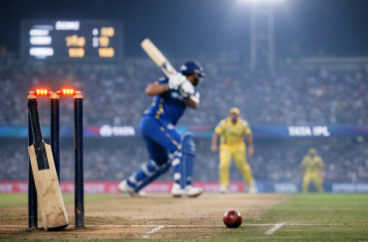
Death overs in IPL 2026 are quietly reshaping how cricket betting sites price matches, and most bettors are still reacting too late. Across recent cricket matches, the final overs have become the most decisive phase, yet live cricket betting markets continue to rely on earlier scoring patterns and outdated models.
In a tournament where margins are increasingly thin, it is no longer the powerplay or middle overs deciding outcomes. It is what happens between overs 16 and 20. And that shift is creating a growing gap between what the market expects and what actually unfolds.
Reading time: 4 minutes
The Phase Where Matches Are Really Won
Across the IPL and other major cricket tournaments, teams are no longer building towards a steady finish. They are holding back and accelerating late, often flipping matches in just a few overs.
Sides like Mumbai Indians and Chennai Super Kings have repeatedly shown the ability to stay within reach before exploding at the death. That pattern is now becoming common across multiple cricket teams, not just the elite ones.
For bettors using ipl betting apps, this creates a dangerous illusion. A match that looks balanced after 15 overs is no longer neutral. It is waiting to shift.
The Numbers Behind the Late Overs Surge
The data is no longer subtle, it is pointing to a clear shift in how these matches are unfolding. What used to be a gradual build through an innings is now being replaced by something far more explosive at the end.
In IPL 2026, scoring patterns are stretching in two directions. Through the middle overs, teams are often content to tick along at a controlled rate, hovering around seven or eight an over. But once the final phase begins, that tempo changes dramatically. The last five overs are now producing returns closer to ten or even twelve runs per over, and in many cases, even more when momentum fully kicks in.
It is not just about volume, it is about timing. Innings that add fifty or more runs in the final stretch are increasingly turning cricket matches, not gradually, but decisively. Finishers are stepping in and striking at rates well beyond 160, turning what looks like a competitive total into something far more difficult to chase in a matter of deliveries.
This is no longer a marginal trend. It is a structural shift in how innings are being constructed. And yet, despite how visible this pattern has become, most cricket betting sites are still pricing totals as if the earlier overs define the outcome.
Recent IPL Matches Are Already Showing the Shift
The trend is not theoretical, it is already playing out in real time across IPL 2026.
In the clash between Punjab Kings and Rajasthan Royals, the match stayed relatively balanced deep into the innings before shifting sharply in the final overs. Rajasthan’s late acceleration turned what looked like a manageable chase into a controlled finish, with their scoring rate lifting significantly after the 15 over mark.
That pattern repeated in other fixtures as well. Teams that held wickets back were able to unlock a completely different scoring gear late in the innings. Individual performances have reflected the same trend, with finishers striking well above 150 in the closing overs, often adding 30 to 40 runs in just a handful of deliveries.
Even in matches where totals crossed 200, the decisive difference was rarely the start. It was the final burst. Sides that added 60 or more runs in the last five overs consistently pulled away, turning competitive games into one-sided results in a very short space of time.
This is exactly where live cricket betting models struggle.
Because for most of the match, nothing looks broken. The scoring is controlled, cricket odds tighten and stabilise, and the game appears to be following a predictable path. Then the final overs arrive, and everything shifts before the market can react.
By the time that shift becomes obvious on the scoreboard, it has already moved the result beyond reach.
Why Live Cricket Betting Models Are Falling Behind
The problem is not a lack of information, it is timing. Live models are built to respond to what is already on the scoreboard. They follow the flow of cricket scores, adjusting gradually as an innings develops. By the time matches reach the middle phase, typically between overs ten and fifteen, markets begin to settle. Odds tighten, confidence builds, and cricket predictions start leaning toward the side that appears to be in control.
But that sense of control is often misleading. Because just as the market stabilises, the game is about to change. Once the death overs begin, everything accelerates. Bowlers have less room for error, batters take greater risks, and the scoring rate jumps almost instantly. What looked like a balanced contest can drift out of reach in the space of two or three overs.
By the time the market adjusts, the moment that mattered has already passed. That is where the disconnect lies. Markets are still reacting to what has happened, while the result is being decided in real time.
The Hidden Pattern Bettors Are Missing
At first glance, these late swings might look unpredictable, but they are anything but random.
Across IPL 2026, a pattern is quietly repeating itself. Cricket teams are no longer chasing early dominance. Instead, they are holding their shape, preserving wickets, and delaying their most aggressive phase until the very end. What appears to be a slow start is often a controlled one, and what looks like stability in the middle overs is often part of a larger plan.
By the time that plan reveals itself, it is usually too late to counter. Once you start to recognise how teams are pacing their innings, the game begins to look different. It becomes less about reacting to current scores and more about understanding when the real push is coming. And that shift in perspective is where the edge starts to form.
What This Means for Cricket Betting
When late acceleration becomes the norm, the signals that once guided cricket betting decisions start to lose their reliability. Early scoring no longer tells the full story, and even a steady middle phase can mask what is about to happen next.
Markets, however, are still anchored to those traditional patterns. They continue to price matches based on how innings used to unfold, not how they are unfolding now.
That is where the opportunity opens. Teams that build toward a late surge often appear behind the game longer than they actually are. When the acceleration finally comes, it arrives quickly, and in many cases, before the odds have had time to catch up.
This is where bettors can find value, not by chasing what has already happened, but by anticipating what is about to happen. What looked like a controlled, predictable match can shift in an instant. The balance holds just long enough to create confidence, before the final overs break it open completely.
And once again, the market is left reacting after the outcome has already started to unfold.
Betting on cricket should always be approached with control and awareness. Rapid changes in scoring, especially in T20 formats, can shift outcomes quickly. Set limits, avoid chasing losses, and ensure betting remains a responsible activity.
Disclaimer
This article is based on observed trends across cricket matches and publicly available performance data. It is intended for informational purposes only and does not constitute betting advice or guarantees of outcomes. Always make independent decisions when engaging with cricket betting markets.

Pradeep Singh
Pradeep Singh is a cricket betting expert with 17+ years of experience. His work is in The Times of India, Hindustan Dainik, and Dainik Bhaskar, covering cricket betting and gambling news.
At cricket-betting.net, he is our in-house expert, writing betting guides, match analysis, and news about cricket betting markets.


