
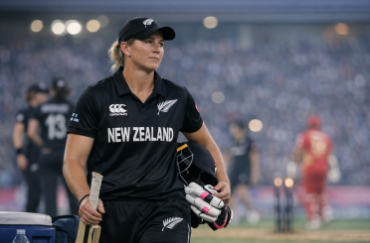
Sophie Devine retirement decision is emerging as one of the defining shifts in the wider 2026 cricket cycle, even as attention across the sport remains split between tournaments like IPL 2026 and the upcoming Women’s T20 World Cup. Alongside Lea Tahuhu, she has confirmed she will step away after the tournament, a move that is already beginning to reshape how New Zealand are being assessed.
This is not just about two experienced players leaving. It is about what disappears with them. Across recent international cycles, Devine has been one of the most influential all rounders in the format, while Tahuhu has provided a consistent presence with the ball.
Reading time: 3 minutes
What New Zealand Are Losing Goes Beyond Experience
Devine’s role has been central to New Zealand’s structure. She has combined top order aggression with all round reliability, often setting the tone early while still contributing with the ball.
Tahuhu’s role has been different but equally important. As a senior pace option, she has been used in pressure moments, particularly when control is needed to stop momentum. Removing both at the same time changes how the cricket team functions. It is no longer just about performance. It becomes about identity.
The Numbers That Define Their Impact
Devine’s recent T20 cricket record highlights her importance. She has maintained a strike rate above 120 while contributing regularly with the ball, making her one of the few genuine all rounders capable of influencing multiple phases of a match.
Tahuhu, meanwhile, has consistently operated as a wicket taking option, often finishing spells with an economy rate around the mid six to low seven range, providing control during key moments. Together, they have anchored both ends of New Zealand’s structure. That balance is now set to disappear.
A Transition That Introduces Uncertainty
With cricket players like Nensi Patel, Izzy Sharp, Bree Illing, Flora Devonshire and Polly Inglis stepping into a World Cup environment for the first time, New Zealand are moving into a different phase altogether.
Fresh players naturally bring energy and intent, but they also introduce a level of unpredictability that cannot be ignored. Roles are still settling, combinations are still forming, and the ability to execute under pressure remains largely untested at this level.
That does not immediately weaken the cricket team, but it does change how they behave in key moments. Instead of a structure built on certainty, this becomes one built on potential. And that shift brings a different kind of volatility, one that is far harder for markets to recognise before it begins to show.
Why This Matters More in Tournament Cricket
In league formats, teams have time to adjust. In cricket tournaments, every small imbalance is amplified. Without established roles, teams can drift during key phases. A missed opportunity early or a lack of control late can quickly change the direction of a match.
New Zealand’s structure, which once relied on experienced anchors, is moving toward something less certain. That shift matters more in knockout scenarios.
The Market Still Trusts Old New Zealand But the Reality Is Already Changing
Betting sites don’t move on emotion, but they do move on memory. And right now, New Zealand are still being priced based on a version of the team that is starting to fade.
For years, the presence of players like Sophie Devine and Lea Tahuhu created a sense of reliability. They brought structure, calm under pressure, and a level of predictability that markets could trust. That trust has not disappeared yet. But the foundation behind it is beginning to shift.
With new players stepping into womens cricket key roles, the balance is no longer as settled. Performances are likely to fluctuate more, and the margins between control and collapse become thinner. What was once dependable now carries a layer of uncertainty. And this is where the gap begins to open.
Markets tend to hold onto established expectations longer than they should. They adjust, but rarely before the shift is already underway. By the time the change is fully reflected in the cricket odds, the underlying reality has already moved on. This is not just a long term transition. It is already starting to influence how matches unfold in the short term.
Betting on cricket should always be approached with a clear sense of control. Form, conditions, and match situations can change rapidly, especially in tournament play. Set personal limits, avoid chasing losses, and make decisions based on logic rather than impulse. Betting should remain a measured activity, not something relied upon for returns.
Disclaimer
The views expressed here are based on recent developments and available performance data at the time of writing. They are intended to provide context and analysis only, not to serve as predictions or betting recommendations. Outcomes in sport are inherently uncertain, and readers should rely on their own judgment before placing any wagers.

Wendy Prinsloo
Wendy is an iGaming journalist and sports betting writer who covers cricket news, betting platforms, odds, and online casinos.
She writes about the latest developments in the cricket industry and helps readers stay updated while understanding how betting works.


