
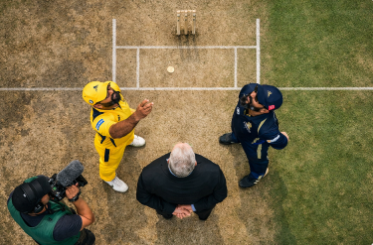
The toss importance in cricket rarely looks dramatic in the moment. A coin goes up, a call is made, and the game moves on. But that is where the story actually begins. Long before the first ball is bowled, the direction of the match is already starting to form. Captains are not guessing. They are reading the surface, the conditions, and how they expect the game to unfold. It does not feel decisive at the time. But it rarely feels that way when it matters most.
Reading time: 4 minutes
Why the Toss Still Decides More Than It Should
In T20 cricket, matches often turn on small shifts that build over time. The toss is one of those moments. On some surfaces, the pitch looks good early and then quietly slows down. On others, the game becomes easier later under lights as dew begins to settle.
The decision is simple on paper. Bat or bowl. But getting that call right can mean playing the match on your terms. Getting it wrong means chasing a game that slowly slips away. And that shift is not always obvious straight away.
The Situations Where the Game Starts to Tilt
Some cricket matches reveal the impact early. Others take longer. On slower pitches, the team batting first often looks comfortable at the halfway stage. The score feels competitive, but not out of reach. Then the chase begins.
The ball stops coming on. Boundaries dry up. The required rate starts to climb almost without warning. By the time it becomes clear, the balance has already moved. At other venues, especially where dew settles in, the opposite happens. A total that looks strong suddenly feels exposed once the ball starts skidding on.
The shift works both ways. But it always starts with that first decision.
The Number That Looks Normal Until It Doesn’t
A first innings total in the 160 to 180 range rarely looks decisive in cricket tournaments. It sits right in the middle, neither dominant nor weak. But on the wrong surface, that number changes meaning.
On a slowing pitch, it becomes harder to chase than it first appears. On a dewy surface, it can quickly fall short. The number stays the same. The conditions decide what it is worth.
Recent Matches Where the Toss Told the Story Late
Recent IPL games have followed a familiar pattern. The toss decision looks routine at the start, but its effect only becomes clear as the match unfolds. When Chennai Super Kings faced Mumbai Indians at Chepauk, batting first looked like the safe call. The pitch held together early, the score built steadily, and nothing seemed out of the ordinary.
Then the chase reached the middle overs. The surface slowed, timing became harder, and the scoring rate began to stall. What looked manageable slowly turned into pressure.
A similar shift played out when Gujarat Titans met Punjab Kings in Ahmedabad. The first innings set the platform, but the real story emerged between overs 10 and 15 of the chase, when momentum began to slip and the required rate started climbing.
In contrast, matches involving Royal Challengers Bengaluru in Bengaluru told a different story. With dew coming in later, chasing sides found it easier to accelerate at the end. Totals that looked competitive were quickly reassessed once the conditions changed.
In each case, the outcome did not hinge on a single moment. It developed gradually, exactly the way the toss had set it up.
Where Cricket Betting Sites Start to Fall Behind
This is where the shift starts to hide in plain sight. Cricket betting sites react to what is happening on the surface. The cricket score, the wickets, the required rate. Everything that is visible. But the real change does not always show up straight away.
A pitch begins to slow just slightly. Timing is not as clean. Shots that were finding the boundary start landing short. It is subtle at first, almost easy to ignore. Then a few overs pass, and the game no longer feels the same.
By the time that change becomes obvious, the market has already adjusted. And the brief moment where the shift could be read early is gone.
What Bettors Should Notice Before Everyone Else Does
It usually starts with the toss, but not in an obvious way. The decision itself gives a clue, but the real story begins in the first few overs. The way the ball behaves, the ease of scoring, the kind of risks batters are taking.
Nothing stands out on its own. But when those small signals start to line up, they begin to point in one direction. The cricket match starts to reveal what it is becoming long before the scoreboard confirms it. And once that picture is clear, the opportunity has already passed.
The Decision That Quietly Decides the Match
At the beginning, the toss barely registers. Just another moment before the action starts. But as the game moves forward, its influence begins to surface in ways that are easy to miss. A chase that never quite gets going. A required rate that keeps creeping up. An innings that feels slightly harder than it should.
Nothing dramatic happens. It just shifts, slowly and steadily, until one side is no longer really in control. And by then, the outcome is not being decided in that moment. It was shaped much earlier, by a decision that didn’t seem important when it was made.
Toss outcomes can influence match direction, but they are only one factor. Avoid placing too much weight on a single decision and consider overall conditions before making bets.
Disclaimer
This content is based on general cricket trends and match conditions. It is intended for informational purposes only and does not guarantee outcomes. Always assess situations independently and understand the risks involved in betting.

Pradeep Singh
Pradeep Singh is a cricket betting expert with 17+ years of experience. His work is in The Times of India, Hindustan Dainik, and Dainik Bhaskar, covering cricket betting and gambling news.
At cricket-betting.net, he is our in-house expert, writing betting guides, match analysis, and news about cricket betting markets.


