
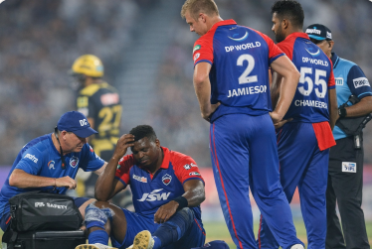
What looked like a straightforward Lungi Ngidi injury update has quietly turned into something far more complicated. Lungi Ngidi is now at the centre of a situation that is not just about fitness, but timing, regulations, and how quickly markets react.
The Delhi Capitals camp were already dealing with the immediate shock of his head injury. Now, an ICC rule has added another layer of uncertainty that could ripple directly into betting markets over the next match.
Because this is no longer just about whether Ngidi plays. It is about how much he can actually influence the game if he does.
Reading time: 3 minutes
The Rule That Quietly Changes Everything
Under ICC playing conditions, a player who spends time off the field due to injury must serve that time before being allowed to bowl in the next match. That detail rarely gets attention, but in this case, it matters.
For Delhi Capitals, it means Ngidi could be available on paper but limited in impact when it matters most. And that creates a subtle but important shift. Markets tend to react to availability, not restriction. That gap is where early value begins to form.
If bettors assume Delhi regain their full bowling strength with Ngidi’s return, pricing can lean too heavily in their favour. But if his overs are delayed or reduced, the actual balance of the game tells a different story.
Delhi’s Bowling Just Lost Its Predictability
Even before this rule came into play, Delhi were already adjusting. Replacement options like Kyle Jamieson and Dushmantha Chameera change the structure of the attack, but not in the same way.
Ngidi brings control at the death and the ability to absorb pressure in key phases. Delhi have conceded at over 10 runs per over in death overs this season, and without Ngidi, that weakness becomes even more exposed. With that control reduced, Delhi’s bowling becomes far more reactive than controlled.
And reactive bowling units are harder for cricket betting sites to price correctly. That is where totals and late over markets begin to shift.
If Delhi lose grip in overs 16 to 20, run lines can stretch quickly. If early wickets do not fall, the pressure builds faster than expected. These are not dramatic changes, but they are enough to move outcomes.
The Betting Window Opens Before Confirmation
This is still a developing situation, and that is exactly why it matters. Markets often wait for confirmed team news before making full adjustments. But by the time everything is clear, the value is usually gone. Right now, uncertainty sits in the middle.
If Ngidi plays but cannot bowl immediately, or if Delhi reshuffle again, those small delays in cricket bets could create short windows across cricket odds and totals markets. This is not about predicting whether Delhi win or lose. It is about recognising that their bowling unit is no longer being priced as uncertain as it actually is.
A Small Detail That Markets Might Miss
This started as an injury update. It has become something more nuanced, and more important for betting. Delhi Capitals are not just dealing with a missing cricket player. They are dealing with a timing issue that changes how their bowling attack functions.
And in T20 cricket, timing is everything. Especially when the market has not caught up yet.
Cricket betting can shift quickly, especially in fast formats like T20. Stay in control of your spending, avoid emotional decisions, and keep betting as a measured and enjoyable activity rather than a financial strategy.
Disclaimer
This article reflects analysis and current information at the time of writing. Match conditions, player roles, and market prices can change rapidly, so readers should always make independent, informed decisions before placing any wagers.

Wendy Prinsloo
Wendy is an iGaming journalist and sports betting writer who covers cricket news, betting platforms, odds, and online casinos.
She writes about the latest developments in the cricket industry and helps readers stay updated while understanding how betting works.


