
Most cricket bettors start their analysis by looking at recent results.
Who won their last match? Which batter is in form? Which bowler is taking wickets?
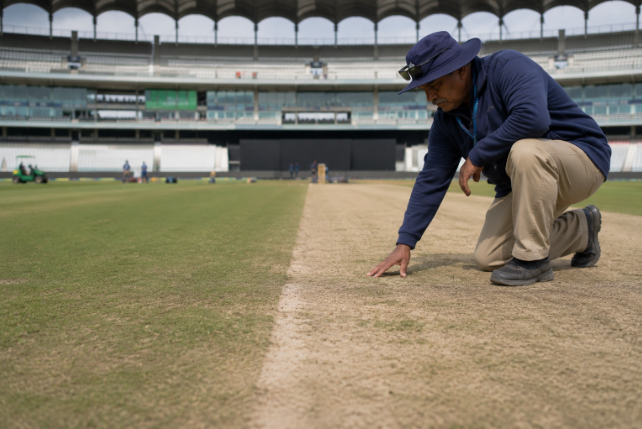
Those questions matter, but they often receive more attention than an equally important factor: the venue.
Professional cricket teams spend days analysing conditions before a match. Yet many recreational bettors still focus almost entirely on team form.
That creates opportunities for anyone willing to spend more time understanding how different grounds influence scoring, bowling and match outcomes.
Reading time: 3 minutes
Not All Cricket Grounds Play The Same
This may sound obvious, but betting markets do not always price venue differences perfectly.
A total of 170 can be highly competitive at one ground and completely inadequate at another.
Some venues consistently favour batting. Others reward spin bowling. Some become dramatically easier for chasing teams under lights.
Even within the same country, conditions can vary significantly.
An IPL match in Chennai often presents very different challenges from a game played in Bengaluru or Hyderabad.
Understanding those differences is often more valuable than simply knowing which team won its previous match.
Why Team Form Can Sometimes Mislead
One of the biggest mistakes in cricket betting is assuming performances automatically transfer between venues.
A batting lineup that dominates on flat surfaces may struggle when confronted by seam movement or slower pitches.
Likewise, bowlers who thrive on spin-friendly wickets may become less effective on grounds where batters can attack more freely.
Context matters.
When evaluating form, bettors should always ask where those performances occurred rather than simply looking at the results.
The Most Important Venue Trends To Study
Not every statistic provides useful insight.
The most valuable venue indicators typically include:
- Average first-innings score.
- Chasing success rate.
- Pace versus spin effectiveness.
- Powerplay scoring trends.
- Boundary dimensions.
- Weather patterns and dew influence.
Together, these factors help build a more complete picture of how a match is likely to develop.
That information often becomes particularly useful in T20 cricket, where small changes in conditions can significantly affect scoring rates.
Why Markets Often Overreact To Recent Results
Recent form is easy to understand.
Venue data requires more work.
That difference helps explain why public betting support often follows teams coming off impressive victories, regardless of whether conditions are changing dramatically for the next match.
Markets can sometimes become too focused on what happened last week rather than what is likely to happen next.
Venue analysis provides a useful way to challenge popular assumptions.
The Hidden Impact Of Toss And Conditions
Venue trends also help explain why toss results matter more in some matches than others.
A ground with a strong chasing bias may become significantly more important if dew is expected.
Meanwhile, a venue with balanced historical results may reduce the importance of the toss altogether.
Without understanding venue characteristics, it becomes difficult to judge whether market reactions are justified.
How Professional Analysts Approach Venue Data
Experienced cricket analysts rarely study venue statistics in isolation.
Instead, they combine them with team strengths.
A venue favouring spin bowling becomes more relevant if one side possesses a stronger spin attack.
A batting-friendly surface matters more when both teams feature aggressive top orders.
The goal is not simply identifying venue trends but understanding how those trends interact with the players taking part.
The Bottom Line
Team form will always matter.
However, venue conditions often provide the missing context that explains why teams perform well one week and struggle the next.
For bettors looking to improve their analysis, studying the ground can be just as important as studying the players.
In many cases, understanding where a match is being played offers more insight than focusing exclusively on recent scorecards.
Quick Venue Analysis Checklist
| Factor | Why It Matters |
| Average First Innings Score | Sets expectations for totals markets |
| Chasing Record | Helps assess toss importance |
| Spin vs Pace Success | Highlights bowling advantages |
| Boundary Size | Influences six-hitting potential |
| Dew History | Can affect second-innings bowling |
| Recent Pitch Behaviour | Shows whether historical trends still apply |
Related coverage:
This article provides information and analysis, not betting advice. All betting carries risk, and losses are more likely than guaranteed returns. Please make independent decisions and bet responsibly.

Macaela Becker
Macaela is an iGaming writer who covers sports betting, casino platforms, and industry news. She researches betting markets, odds, and bonuses to create clear, practical guides.
She focuses on helping you stay informed while making betting easier to understand.


